Lake Como divides opinion. Some visitors think it's the most beautiful place in Europe. A few leave disappointed. The difference is almost entirely in how they visited. This is the honest answer.
Lake Como divides opinion more than almost any destination in Italy. For some visitors it is the most beautiful place they have ever been. For others - particularly those who visited in peak summer, stuck to Bellagio, and spent most of their time in queues - it was expensive, crowded, and not obviously better than a dozen other Italian lakes.
Both groups are describing the same place. The difference is almost entirely in how they visited.
This guide gives you an honest answer to the question. Not the promotional version. Not the Instagram version. The actual answer - including the things that can go wrong, the costs involved, and the specific conditions under which Lake Como genuinely delivers on its reputation.
The short answer
Yes - Lake Como is worth visiting. But it rewards effort and punishes passivity.
Visitors who plan ahead, choose the right time of year, get on the water, and venture beyond the two or three most famous villages tend to come away feeling it exceeded every expectation. Visitors who arrive in August without a plan, spend the day in Bellagio at noon, and try to get somewhere by car tend to feel it was overrated.
The lake itself - the scale of it, the quality of the light, the mountain backdrop, the villas, the silence on the water early in the morning - is genuinely extraordinary. It is not hype. What is hype is the idea that you can experience it passively, by simply turning up.
What makes Lake Como genuinely special
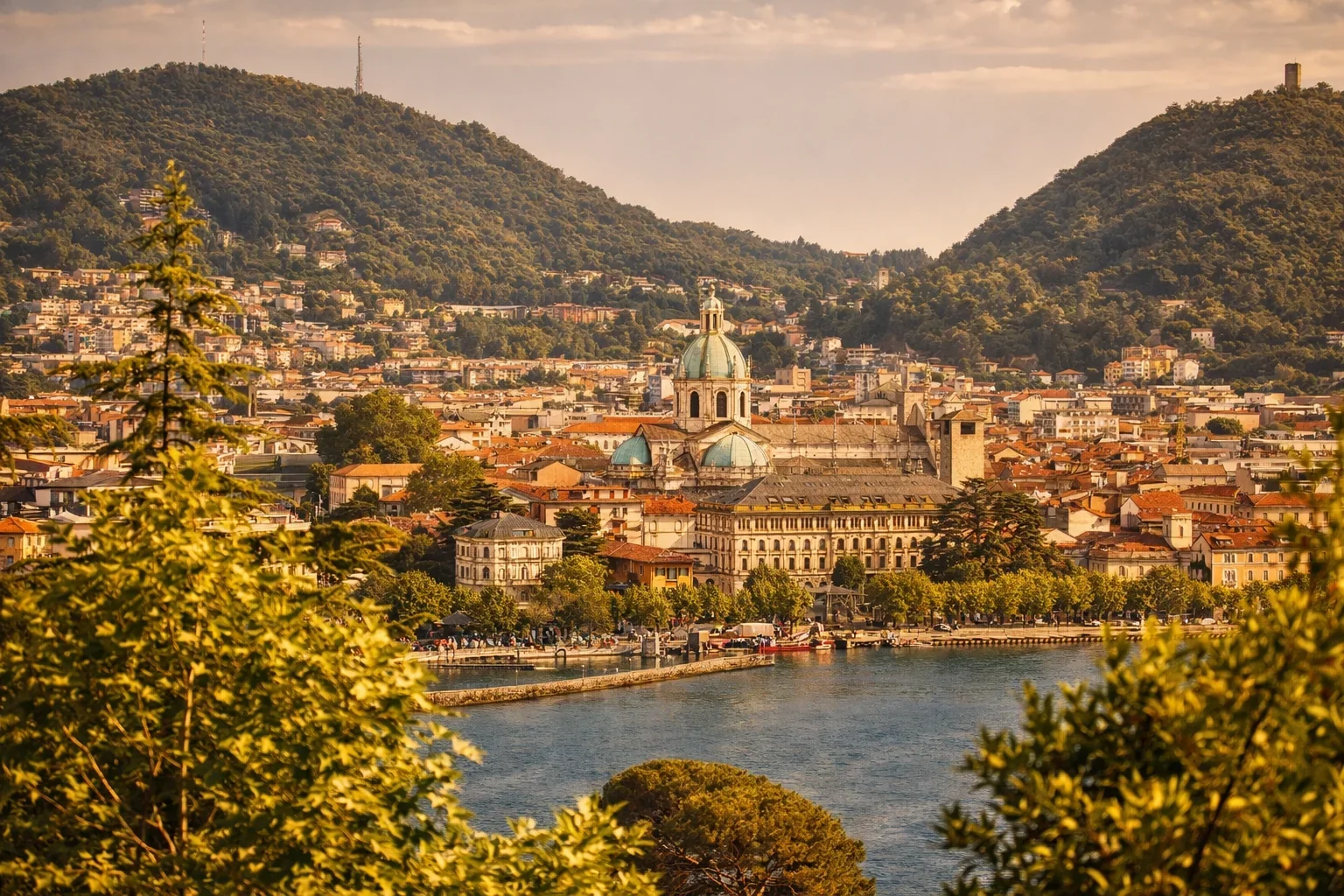
The geography is unlike anything else in Europe. The combination of a deep glacial lake, mountains rising almost vertically from the water to over 2,000 metres, and a string of historic villas along the shoreline creates a landscape that has no real equivalent. The Alps above the northern lake on a clear day are visible from the central basin. The scale is consistently disorienting in the best possible way.
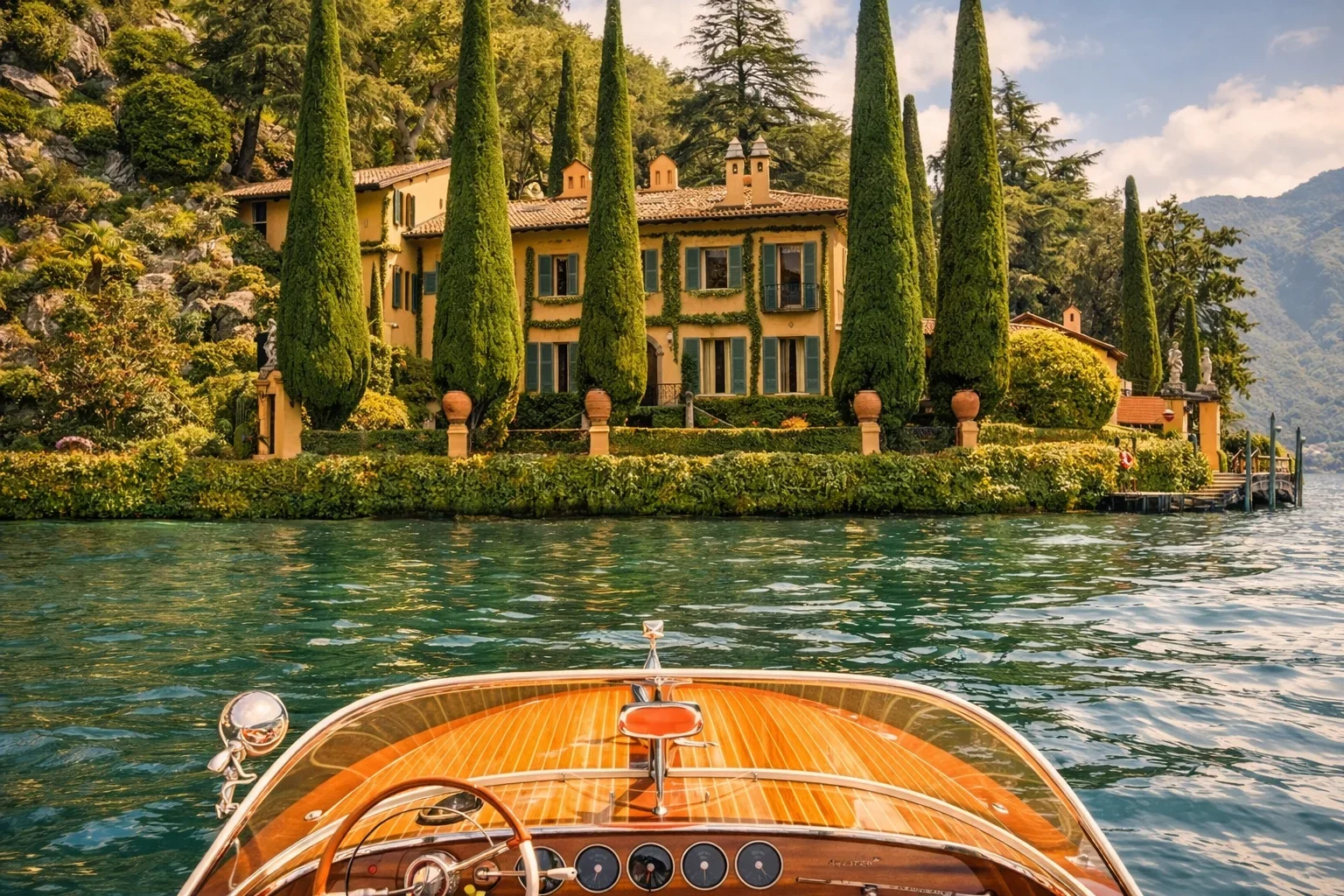
The villas are extraordinary. Lake Como has been attracting wealthy visitors since the Roman era - Pliny the Younger had two villas here - and each century has added to the architectural inventory. Villa del Balbianello, Villa Carlotta, Villa d'Este, Villa Melzi - the concentration of historically significant properties along a single shoreline is unmatched in Italy. Most of them face the water, which means the best way to experience them is from a boat. See our guide to the most beautiful villas on Lake Como.
The light. Northern Italy sits at a latitude where summer light is long and soft in the evenings in a way that Mediterranean light is not. The hour before sunset on Lake Como - the western shore villas catching the afternoon sun, the mountains turning pink above the ridge line, the lake going mirror-flat as the evening winds settle - is something photographers and painters have been trying to capture for centuries. It doesn't photograph as well as it looks. See our sunset guide for where and when to position yourself.
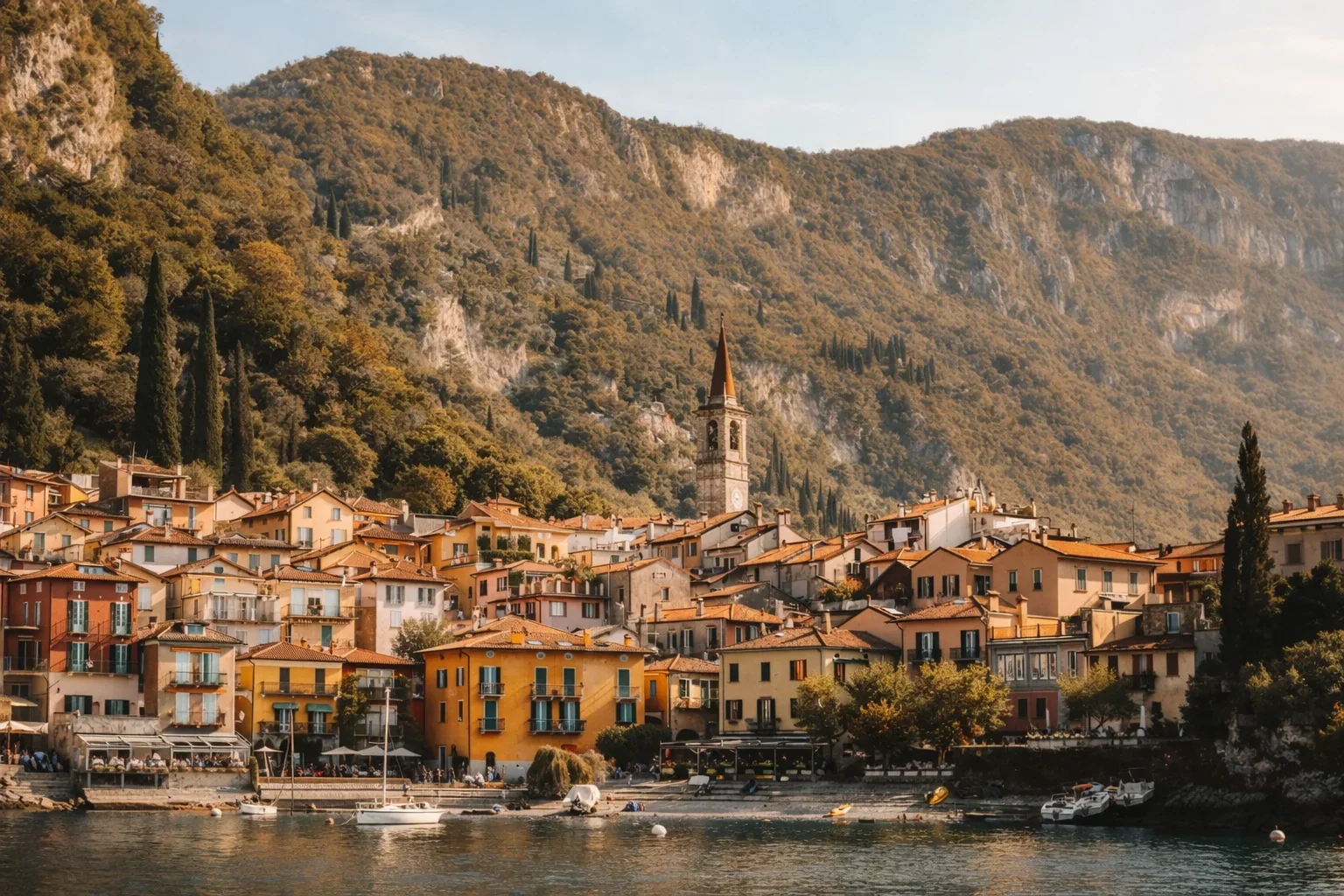
The villages, when you find the right ones. Bellagio and Varenna get the attention, and they deserve it. But the eastern shore villages - Nesso, Lezzeno, Careno, Torno - are a completely different experience: local, unhurried, almost entirely without tourist infrastructure. The lake exists in these places as it has for generations. For a full guide to the two main villages, see our Bellagio itinerary and Varenna guide.
What can go wrong
The crowds. Between late June and August, the main villages - particularly Bellagio - are extremely busy. The word to use is overwhelming: ferry queues, congested lanes, restaurants booked out, hotels expensive and often mediocre at the price. This is the version of Lake Como that produces the negative reviews. It is real and it is avoidable - but only with planning. See our full guide to visiting Lake Como in summer.
The cost. Lake Como is not a budget destination - particularly in peak season. A meal for two with wine in Bellagio will cost more than almost anywhere else in northern Italy. Hotels in the main villages carry significant premiums. The lake road hotels and restaurants are more reasonable; the waterfront ones are not. Budget carefully and know what you're paying for.
The transport. The ferry network works, but it has limits. In peak summer, car ferry queues can run to an hour or more on the main crossings. The lake roads are narrow and congested. Visitors who arrive by car and try to drive between destinations lose significant time and patience. The answer - train to the lake, ferry on the lake, private boat when the experience matters - requires planning but is straightforwardly better. For a full breakdown, see: ferry vs private boat on Lake Como.
The day-trip trap. A single day visit to Lake Como from Milan - arriving at 10am, leaving at 6pm - gives you a surface impression of Bellagio or Varenna at their busiest. It is not nothing, but it is not the lake. The visitors who leave disappointed have almost always done a single day. Two nights minimum gives you early mornings and late evenings, which is when the lake reveals itself.
Is Lake Como worth it compared to other Italian lakes?
This is the question that actually matters for most first-time visitors choosing between Como, Maggiore, Garda, and Orta.
Lake Como vs Lake Garda: Garda is larger, more accessible, more family-oriented, and significantly less expensive. It has good beaches, a warmer climate in the south, and feels less precious about itself. Como is more dramatic, more architecturally significant, more concentrated in its beauty. If budget and accessibility are priorities, Garda. If scenery and atmosphere are priorities, Como.
Lake Como vs Lake Maggiore: Maggiore has the Borromean Islands, which are extraordinary. It is quieter than Como and generally more affordable. The landscape is beautiful but less dramatic - the mountains are lower, the villas fewer. Como has the edge on visual impact; Maggiore has the edge on tranquillity.
Lake Como vs Lake Orta: Orta is tiny, almost entirely without mass tourism, and deeply beautiful in a minor-key way. A completely different experience - slower, more intimate, more local. Not a substitute for Como but a compelling alternative for visitors who actively want to avoid the main Italian lake circuit.
The honest position: Lake Como is the most visually spectacular of the Italian lakes and the one most likely to produce the experience that visitors are imagining when they picture an Italian lake. It is also the most likely to disappoint if managed badly.
Who Lake Como is right for
It is right for you if: You care about landscape and architecture. You are willing to get on the water - by private boat or at least by ferry. You are visiting in shoulder season or are prepared to manage the summer crowds carefully. You have at least two nights. You are happy to spend what the experience costs.
It may not be right for you if: You are travelling on a very tight budget and every euro matters. You are visiting in peak August with no flexibility. You want beaches - Lake Como has very few good ones. You have mobility difficulties - most of the villages involve significant hills and steps.
What actually makes the difference
The single variable that most consistently separates great Lake Como visits from disappointing ones is getting on the water.
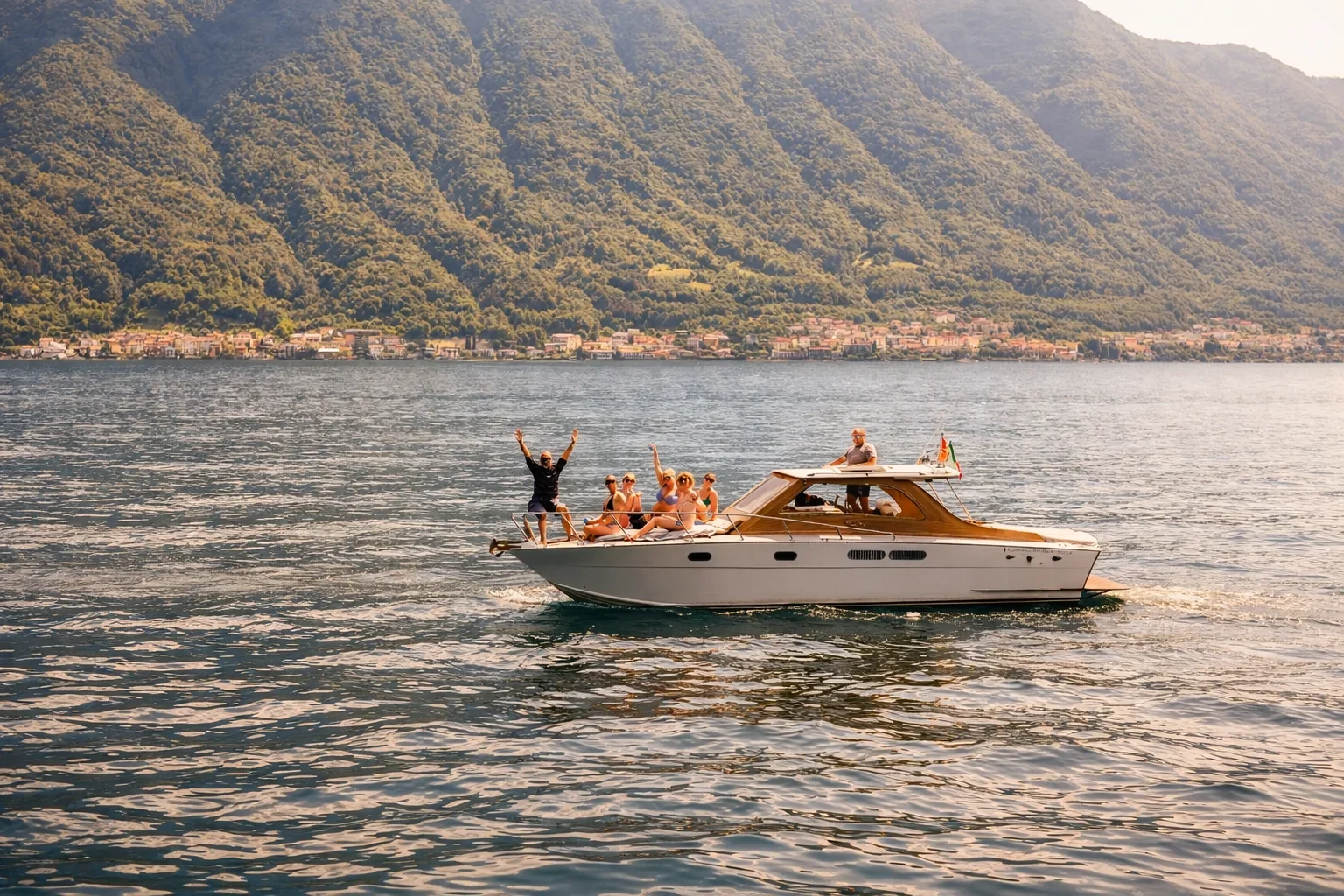
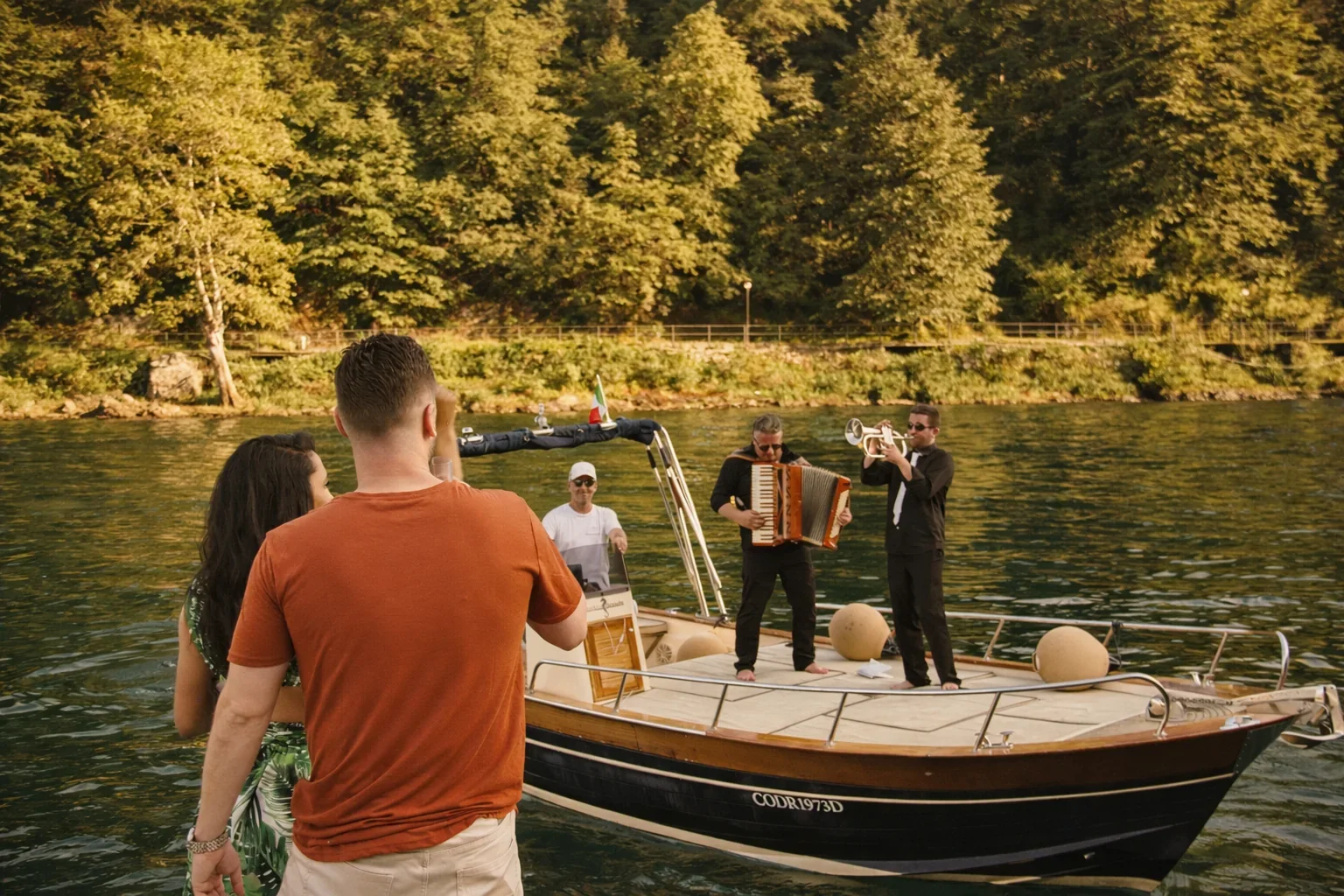
The lake cannot be fully experienced from the shore. The villas, the mountain reflections, the quiet coves between villages, the evening light on the western shore - all of it requires being on the lake surface to properly understand. Visitors who spend their entire time on land, moving between villages by ferry or on foot, see the lake as backdrop. Visitors who get on a private boat - even for a single afternoon - experience it as the subject.
It is not an expensive add-on to the trip. For couples or small groups, a private boat tour is the most cost-effective way to access the part of the lake that makes the destination famous.
Browse our private Lake Como boat tours
For everything you need to plan your visit - transport, timing, where to stay, what to do - see our complete Lake Como first-timer's guide.
Final verdict
Lake Como is worth visiting. It is one of the most beautiful places in Europe and it earns that reputation genuinely, not just photographically.
But it is not a passive destination. It rewards the visitors who approach it with some intention - who choose the right time of year, who get on the water, who stay long enough to see it in the early morning and the late evening, who venture beyond the famous villages into the quieter corners of the lake.
The visitors who leave disappointed almost always did the same things: arrived in peak season without a plan, stayed in Bellagio for half a day at noon, never got on the water. The visitors who leave wanting to return did the opposite.
The lake is the same lake. The difference is the approach.
Frequently Asked Questions
Is Lake Como overrated?
For visitors who visit in peak summer, stick to Bellagio, and don't get on the water, it can feel that way. For visitors who plan well, time their visit carefully, and experience the lake from the water, it almost never is. The reputation is earned - but so is the disappointment, when the visit is managed poorly.
How many days do you need at Lake Como?
Two nights is the minimum for a meaningful visit. Three to four days is the sweet spot for most visitors - enough time to cover the main villages, take a boat trip, see the villas, and have some unscheduled time. A single day from Milan is possible but gives you a surface impression only.
Is Lake Como expensive?
Yes - particularly in peak season and at the main villages. Accommodation and restaurants in Bellagio carry significant premiums. The lake is more affordable in shoulder season (April-May, September-October) and in the smaller villages away from the main tourist circuit. A private boat tour, split across a group, is more reasonable than it sounds and is the single best investment you can make in the experience.
When is the best time to visit Lake Como?
May and September are the best months for most visitors - good weather, manageable crowds, open attractions. June and early July are beautiful but increasingly busy. August is peak season and requires careful management. April and October offer tranquillity and lower prices but with some closures.
Is Lake Como better than Lake Garda?
Different rather than better. Lake Como is more dramatic, more architecturally significant, and more concentrated in its beauty. Lake Garda is larger, more accessible, more affordable, and better for families and beach holidays. The right choice depends on what you're looking for. For scenery and atmosphere, Como. For value and accessibility, Garda.
Share this story