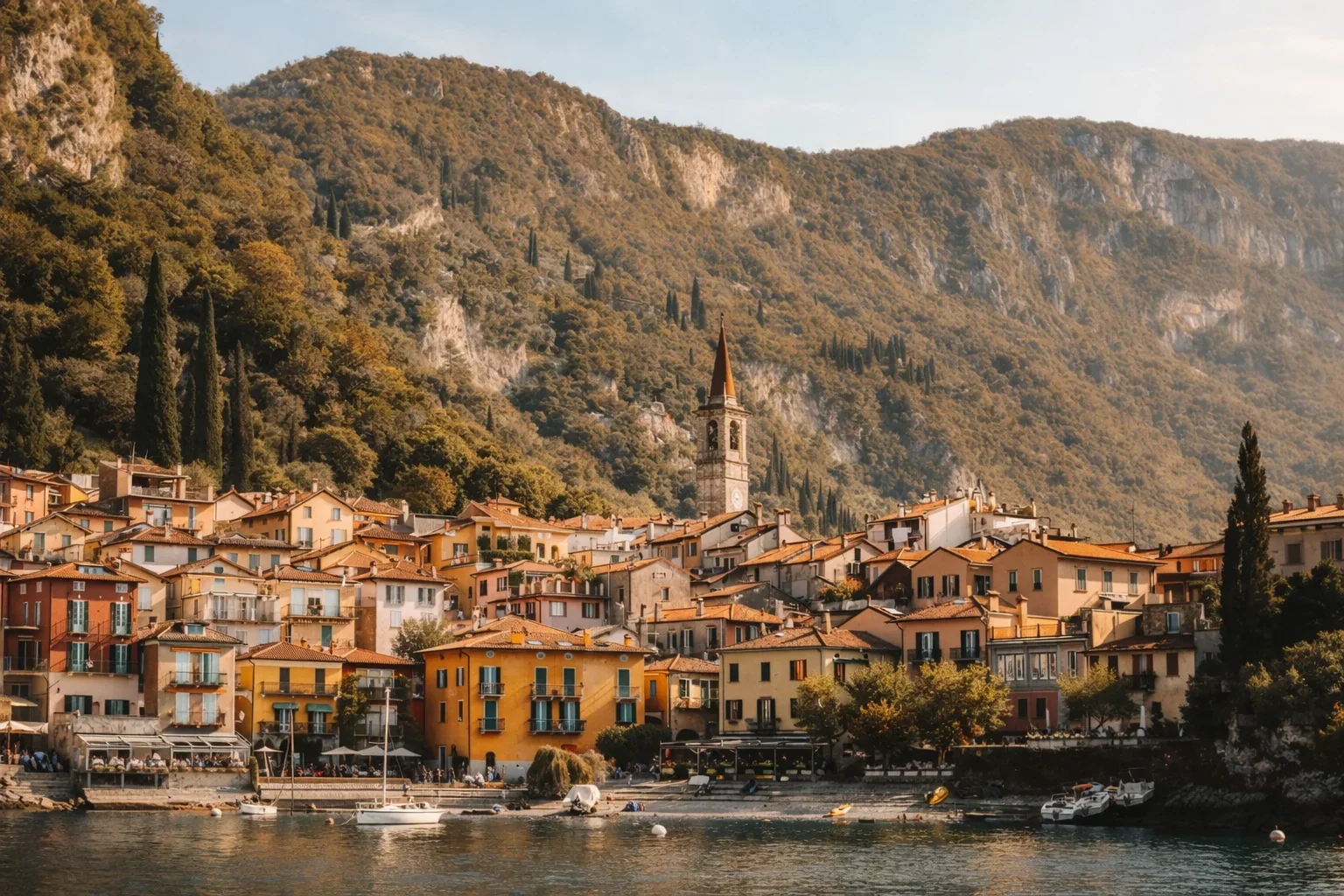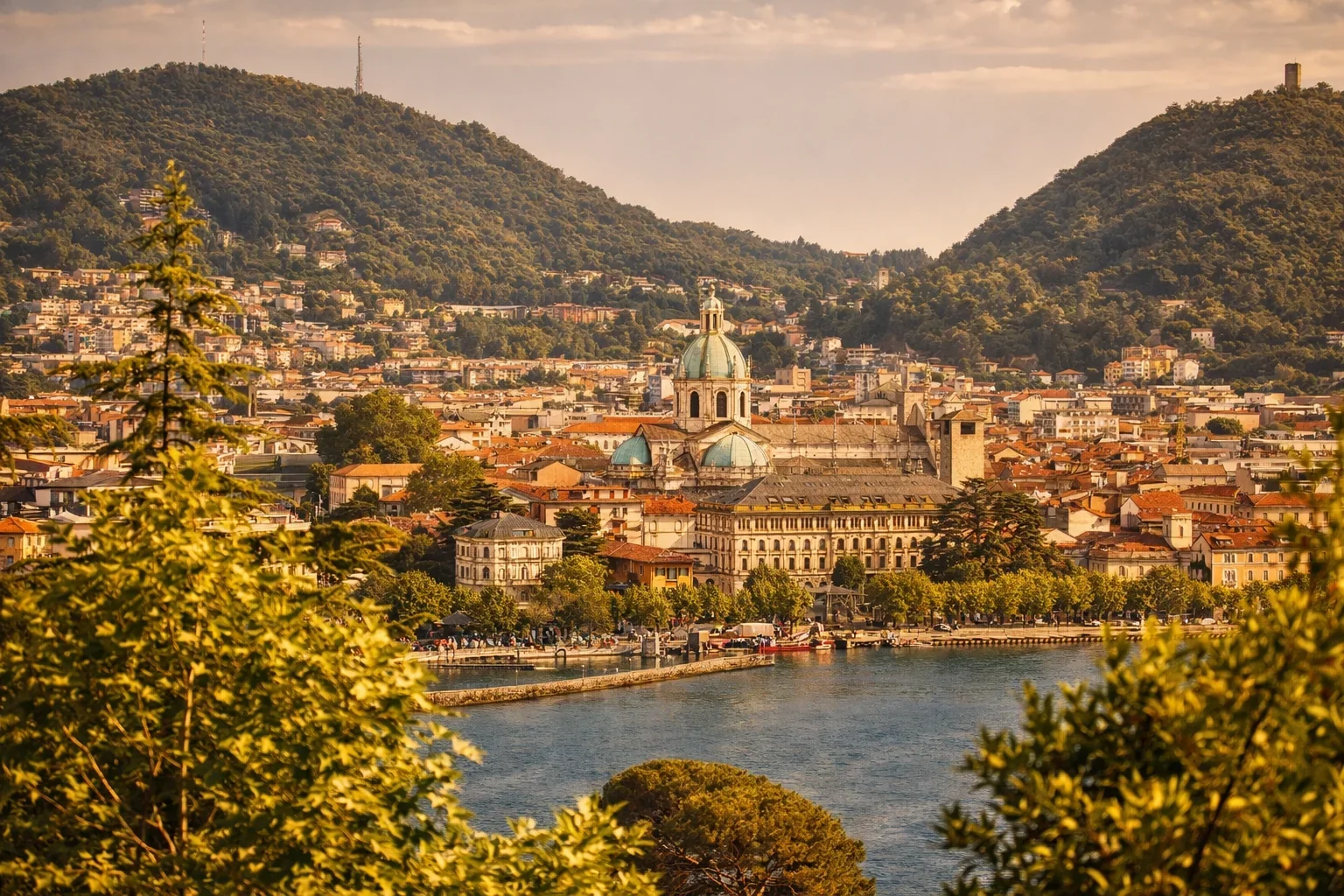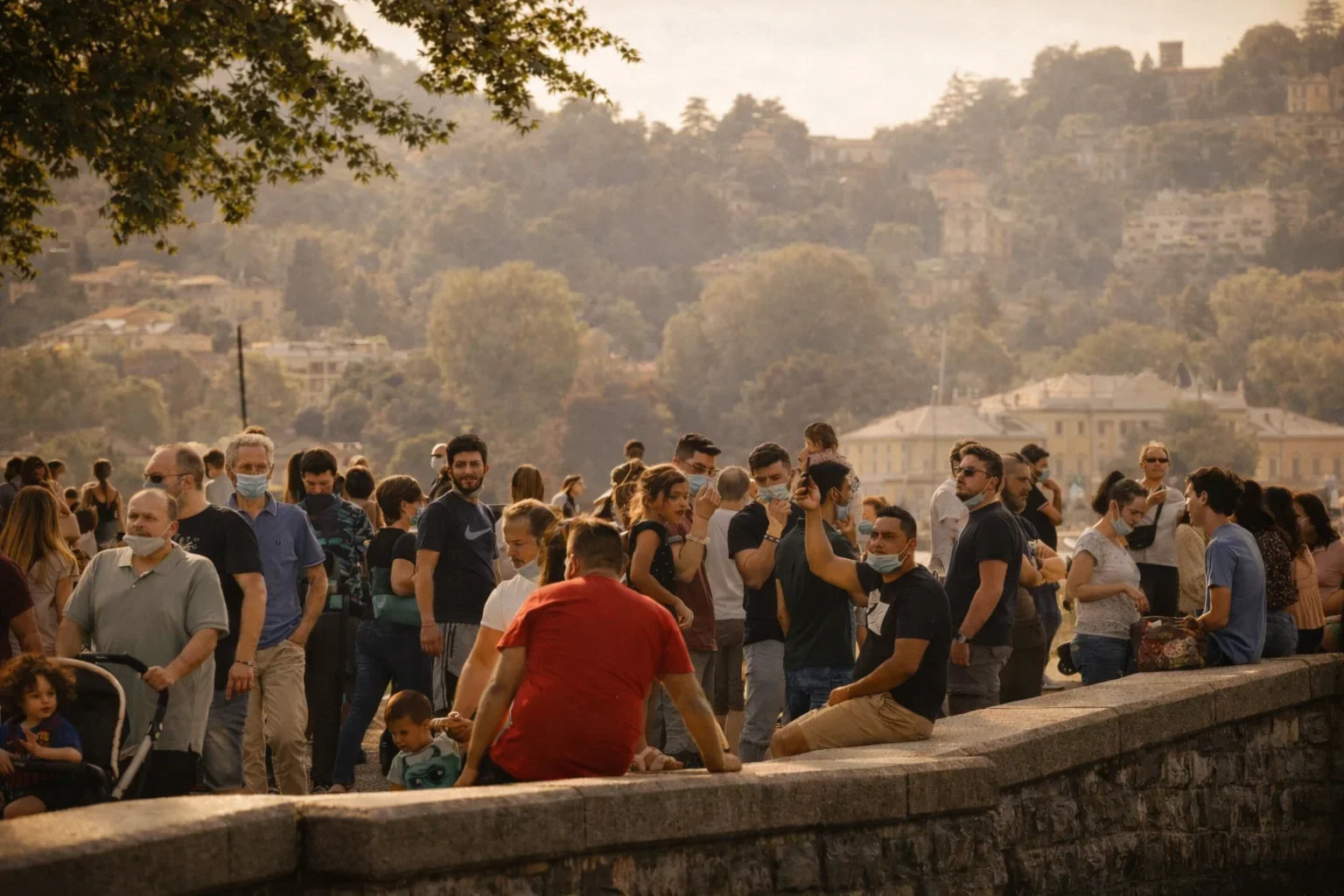
Lake Como in summer is beautiful and busy in equal measure. This guide tells you exactly when the crowds peak, which villages get hit hardest, how transport breaks down under pressure - and how to plan a summer visit that actually feels like a holiday.
Visiting Lake Como in summer is one of the most popular things to do in northern Italy - and one of the most mismanaged. The lake is genuinely stunning between June and September: warm, clear, alive with activity, the mountains at their most dramatic above the waterline. It also attracts an enormous volume of visitors concentrated into a small number of villages across a narrow transport network.
The result, for the unprepared, is queues at ferry docks, gridlocked lake roads, fully booked restaurants and hotels, and the dispiriting experience of spending your holiday surrounded by other people trying to have the same holiday.
None of this is inevitable. With the right timing, the right base, and a slightly different approach to getting around, summer at Lake Como is everything its reputation promises. This guide explains how.
Why Lake Como gets so busy in summer
The short answer: a lot of people want to visit a small number of places at the same time.
Bellagio, Varenna, and Tremezzo together probably account for the majority of day-tripper footfall on the entire lake. These three villages are picturesque, well-connected by ferry, and consistently featured in every travel guide and social media recommendation. The infrastructure - ferry capacity, parking, restaurant tables, hotel rooms - has not scaled to match the demand.
The volume of visitors also concentrates temporally. Most day-trippers arrive by mid-morning and leave by early evening. The hours between 11am and 4pm are when the pressure on infrastructure is highest. Outside those hours, even in peak season, the same villages feel noticeably different.
Where crowds concentrate in summer
Not all of the lake is equally affected. Understanding where the pressure lands helps you plan around it.
Bellagio is the most visited village on the lake and the most congested in summer. The main promenade and the ferry landing area are at capacity on most days between June and August. The lanes above the waterfront are somewhat quieter.
Varenna is popular but less overwhelmed than Bellagio - partly because it has fewer places to eat and shop, and partly because the main lakefront path is narrow enough to naturally limit throughput. Early morning Varenna in summer is genuinely beautiful and manageable.
Como city handles volume reasonably well given its size. The lakefront is busy but the city itself absorbs visitors more comfortably than the smaller villages.
The eastern shore villages - Nesso, Lezzeno, Argegno - see a fraction of the footfall of the headline destinations despite being equally beautiful. These are the summer crowd-avoidance option that most visitors never discover.
Transport limits in summer - this is the real bottleneck
The ferry network is the primary transport system on the lake, and it runs close to capacity in peak summer. Key things to understand:
Car ferries fill up fast. The triangular route between Bellagio, Varenna and Menaggio is the busiest crossing on the lake. In high summer, car ferry queues of an hour or more are common at peak times. If you need to cross with a vehicle, arrive early or avoid peak midday crossings.
Passenger ferries get crowded but keep moving. The passenger-only services are less affected by capacity issues than the car ferries, though the most popular routes at peak times will be standing-room only.
The lake road is not a reliable alternative. The SS340 (western shore) and SS583 (eastern shore) are scenic but narrow. In summer they carry significant traffic from visitors who couldn't get on a ferry or didn't want to pay for one. A journey that takes 25 minutes in October can take 90 minutes on a Saturday in August.
Driving to Bellagio specifically is not recommended in summer. There is limited parking, the access roads are congested, and the experience of arriving by road versus arriving by ferry is not comparable.
For transport planning across all options - train, ferry, bus combinations - Rome2rio is the most useful tool for mapping your route before you travel.
For a full breakdown of the ferry system versus private boat, including when it makes sense to skip public transport entirely, see: Ferry vs private boat - the best way to see Lake Como.
The private boat alternative - and why summer is when it matters most
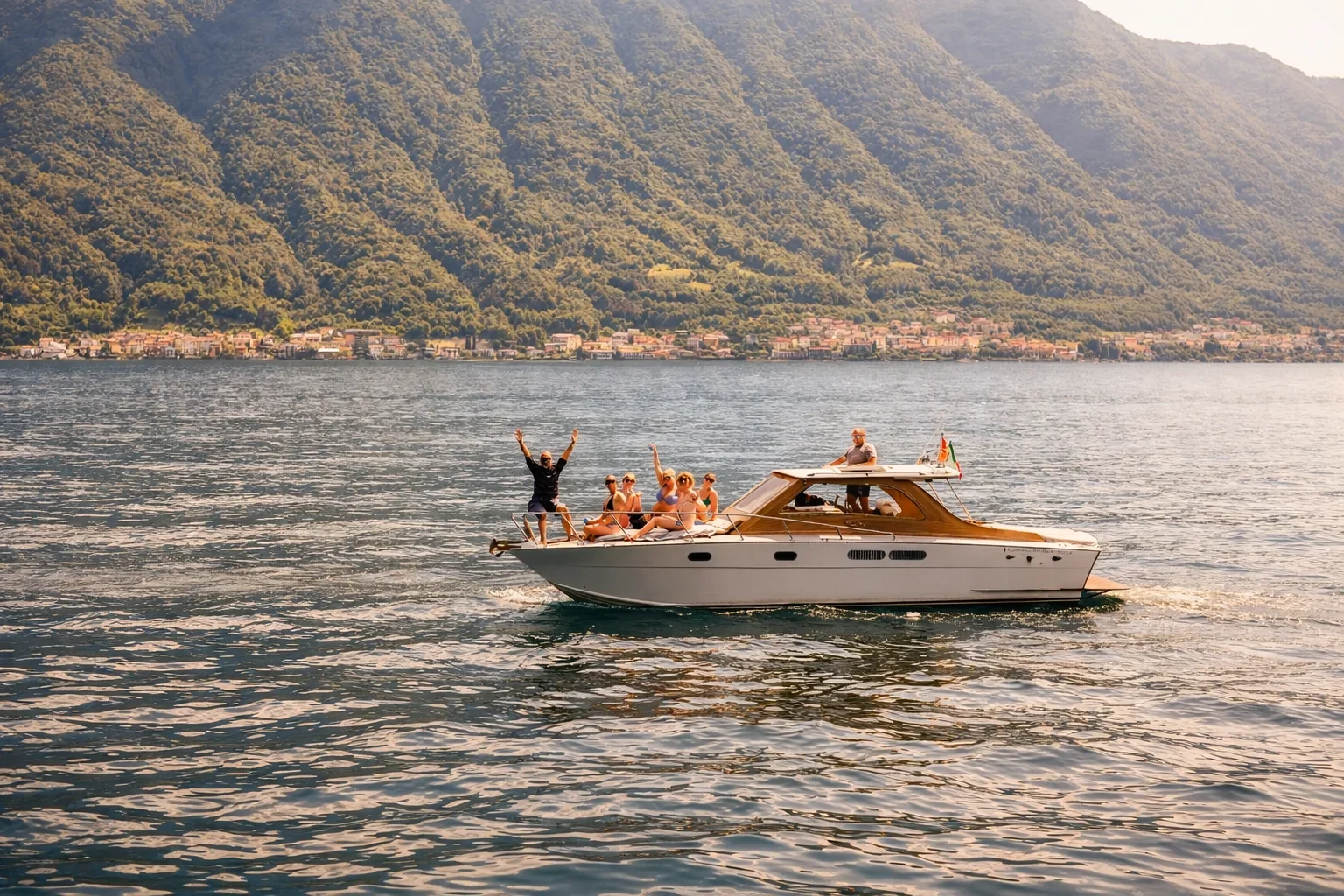
The single most effective way to experience Lake Como in summer - away from crowds, on your own schedule, with access to parts of the lake the ferries don't reach - is a private boat.
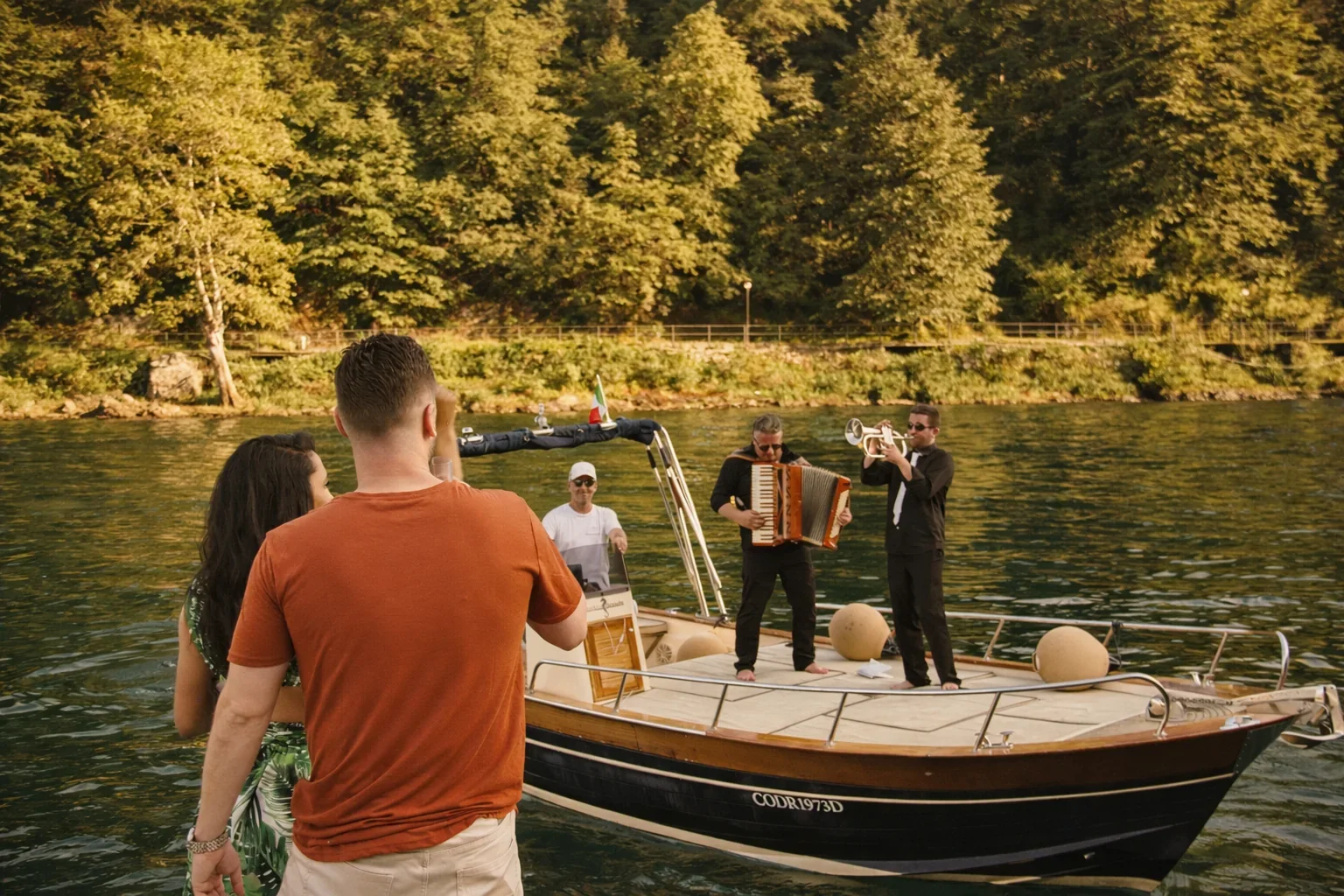
This isn't a luxury add-on. In summer, it's practically the better transport option. While the ferries queue and the roads congest, a private boat departure puts you on the water in minutes, moving at your own pace between wherever you want to go. The lake itself is never crowded. The villas, the coves, the quieter shorelines - all of it is accessible from the water without touching the village infrastructure that gets overwhelmed.
A private afternoon departure - out on the lake from 3pm, returning after sunset - is one of the best ways to spend a summer day at Como. The worst of the crowds clear after 4pm. The light on the water from late afternoon into evening is extraordinary. And you'll have seen the lake in the way that most summer visitors, stuck on promenades and ferry queues, never quite manage.
Browse our private Lake Como boat tours
How to use your time well in summer
Arrive early at every location. The gap between 8am and 10am in summer Bellagio or Varenna is dramatic. The same village that feels overwhelmed by 11am is genuinely pleasant at 9am. If you're based on the lake, use the mornings.
Plan your ferry crossings around off-peak times. Midday and early afternoon are peak crossing times. Early morning and early evening crossings are significantly less crowded and often faster as a result.
Eat away from the main waterfront. The restaurants on the prime lakefront promenades in Bellagio and Varenna carry a premium for the view and are fully booked at standard mealtimes. The restaurants on the streets above the water are generally better value, equally good, and don't require booking a week in advance.
Stay at least two nights. Day-trippers from Milan create most of the midday congestion. Guests staying on the lake can structure their day around the visitor flow - mornings and evenings at the villages, afternoons on the water or resting. A single day visit almost forces you into the worst of the crowds.
Consider basing yourself off the main circuit. Villages like Menaggio, Lenno, Dongo or Gravedona on the northern lake offer genuine summer tranquillity with easy ferry access to the main destinations. They're not on the day-tripper route, which means the lake experience they offer is significantly less pressured.
Is summer actually the best time to visit?
The honest answer is: not necessarily. The shoulder months - April, May, September and October - offer much of what makes summer appealing (warmth, long days, open restaurants and hotels) without the volume.
That said, summer has qualities nothing else quite matches. The lake at 28 degrees, the evening light, the energy of the villages in full season - there is a version of Lake Como in summer that is genuinely one of the great European travel experiences. The difference between that version and the frustrating one is almost entirely a function of planning.
For a broader introduction to visiting the lake at any time of year, see our Lake Como first-timer's guide. For specific village guides, see Bellagio in one day and Varenna in one day. And for making the most of summer evenings specifically, our sunset guide is the right starting point.
Frequently Asked Questions
How crowded is Lake Como in summer?
Very crowded at the main villages - Bellagio, Varenna and Tremezzo - between late June and August, particularly between 11am and 4pm when day-trippers from Milan are at peak volume. Less visited villages on the eastern shore (Nesso, Lezzeno, Argegno) are significantly quieter throughout summer.
What is the best time of day to visit Bellagio in summer?
Early morning - before 10am - is when Bellagio is at its most pleasant in summer. The lanes are quiet, the light is good for photography, and the ferries haven't yet delivered the day's first wave of visitors. Late evening (after 6pm) is similarly calm once the day-trippers have left.
Should I drive to Lake Como in summer?
Not if you can avoid it. The lake roads are heavily congested in summer, parking is limited and expensive at the main villages, and arriving by train and ferry is both faster and more enjoyable. Use Rome2rio to plan train and ferry connections from your starting point.
How do I get around the lake in summer without a car?
Ferry is the primary option - Navigazione Lago di Como runs regular passenger and car ferry services between the main villages. For the Como city end of the lake, trains from Milan arrive at both Como San Giovanni (mainline, about 1km from the water) and Como Nord Lago (right on the lakefront, served from Milan Cadorna). A private boat tour removes the ferry scheduling entirely and gives you full flexibility on the water.
Is Lake Como worth visiting in summer despite the crowds?
Yes - with the right approach. The lake in summer is beautiful, warm, and full of life. The visitors who struggle are generally those who arrive at midday, target only the famous villages, and try to move around by road. Those who time their visits well, get on the water, and explore beyond Bellagio tend to find it exceeds expectations.
Share this story